











Welcome to SACNA!
SACNA is a peer-credentialed association of psychologists in South Africa, who aim to promote and stimulate interest in the field of neuropsychology, while maintaining standards in neuropsychological practice. This is achieved by ensuring that its full members have demonstrated knowledge and competence in the field, by way of examination and peer review.
In addition, SACNA's intention is to promote the professional development of clinical neuropsychology in South Africa,
27 March Kirsty Rice and Melany Hendricks: Ethical issues in the neuropsychological assessment of curatorship - 2 Ethics points for 1 hr 40 mins
29 May Dr A Stephens: Latest developments in the diagnosis and treatment of Alzheimer Dementia – 1 CEU
26 June Urvashi Maganlal ICD-10 Classification with special focus on neuropsychological diagnoses and ethical issues – 2 Ethics points for 1 hr 40 mins
SACNA seminar - Saturday 6 July 2024. Foundations in Natural Product Psychopharmacology by Professor M Knott.
 18-21 September SACNA Conference Gauteng
Click here to submit an abstract
CPD pending
27 Nov Dr K Ross Differentiating the Dementias using bedside cognitive tests - 1 CPD
____________________________________________________________
OT Association has organized an online presentation on the medico-legal process on Tues 26 March 2024 19h00-20h30.
Please Follow this course link below:
https://theotlink.com/product/fce-think-tank-march-2024-the-medicolegal-process/
_____________________________________________________________
In August 2024, the Nordic Neuropsychological Societies are organizing the 15th Nordic Meeting in Neuropsychology in Trondheim, Norway. The entire program is in English, and we expect participation from around the world. You are all welcome, and we would be very thankful if you could distribute information about this event in your respective networks.
Nordic Meeting in Neuropsychology 2024: https://nordicmeeting.com/
______________________________________________________________
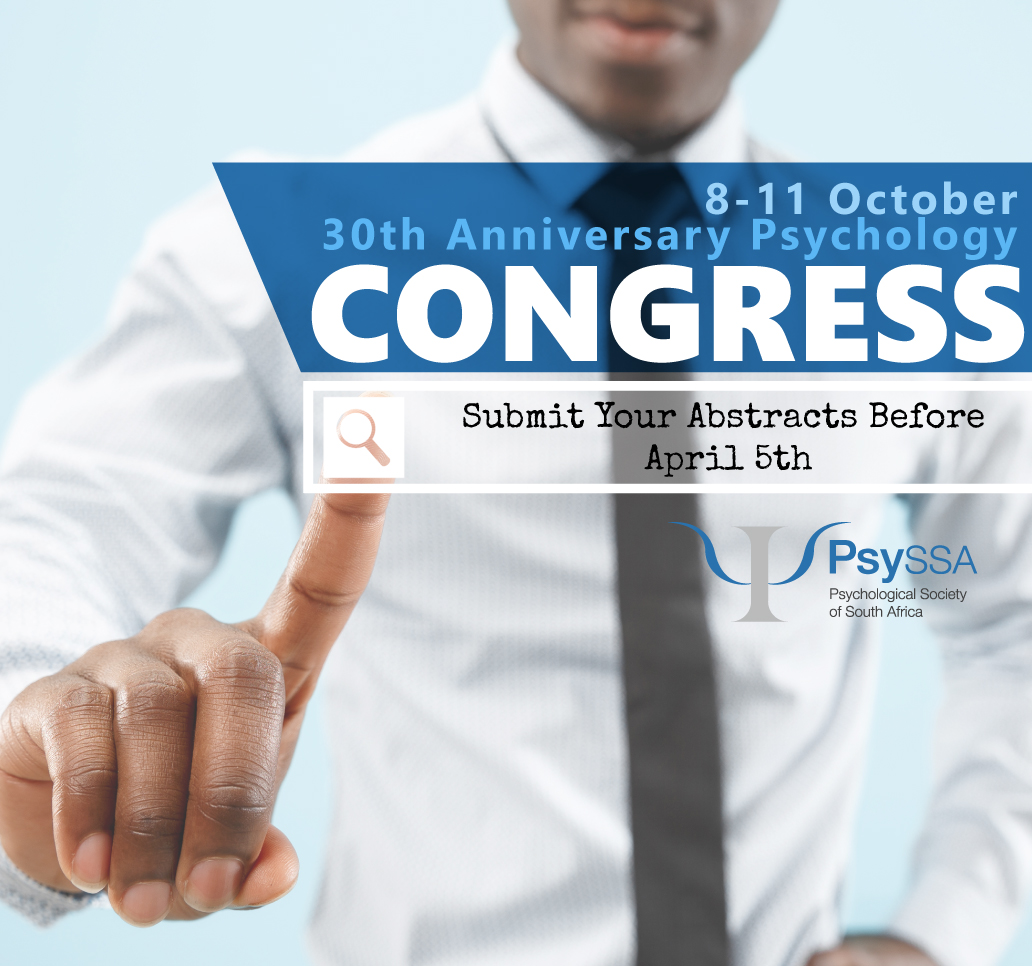
Abstract Submission: Now open (Abstract Submission Link: https://www.securebackups.africa/PsySSA2024/index.xhtml)
Abstract Submission Deadline: April 5
Registration Opens: March 26
PsySSA will be hosting its historic 30th Anniversary Congress, in conjunction with the 10th anniversary conference of the Pan African Psychology Union (PAPU) from 8 – 11 October, at Emperors Palace Conference Centre in Johannesburg. This collaborative event promises to be a pinnacle of academic and professional discourse, featuring a confluence of scholars, academics, practitioners, and students from around the globe. It will reflect on the strides we've made, addressing current challenges, and envisioning the future of psychology within the context of local and global developments. It is an opportunity to explore how we can shape a future where psychology continues to contribute profoundly to the wellbeing of individuals and communities on the African continent and globally.
For more information on our 30th Anniversary Congress, please visit the PsySSA website at: https://www.psyssa.com/events/psyssa-congress/psyssa-congress-2024/general-information/
Invitation to join SACNA as a Full Member
Congratulations on your registration as a neuropsychologist with the HPCSA.
SACNA invites you to join the South African Clinical Neuropsychological Association (SACNA) as a Full Member.
Our membership criteria have been altered, under the current changed circumstances in the profession: At this time, we are awarding Full Membership of SACNA to HPCSA-registered neuropsychologists, who submit two brief (1-3 pages) case reports which demonstrate an acceptable level of competence to the Credentialling Committee of SACNA.
Please let us know if you would like to apply for SACNA full membership at [email protected]
Membership entitles free attendance at our meetings and reduced rates on other educational activities. In addition, our website offers numerous resources which you may find valuable. You will benefit from shared advocacy on SACNA’s behalf and you will become part of an international community of neuropsychologists. The Full membership fee is R1045 for 2024.
As a comprehensive list of HPCSA registered neuropsychologists is not yet available, we invite you to share this with other HPCSA registered neuropsychologists known to you, to disseminate this invitation to join SACNA.
Kind regards
June Rossi and the SACNA Executive Committee
EXECUTIVE COMMITTEE
Dr J Rossi (President), Dr E Steenberg (President Elect), Dr S Truter (Past-President) Dr M Mazabow, Prof A Edwards, Dr F Hemp, Assoc. Prof. A Ferreira-Correia, Ms C Gadd and Ms N van Wyk.
*Please Note:- listing of neuropsychologists and full members is a referral directory for the public.
_______________________________________________________________
Please be aware of the following changes, which will take effect on 1 February 2022:
HPCSA CPD certificates will no longer be issued to HPCSA professionals. After each activity service providers will complete a template and send it to the HPCSA for capturing points. The new process will then automatically upload the accredited CPD activity points to the HPCSA medical professionals’ profile.
The new process relieves professionals of the effort of keeping track of certificates by allowing automatic updates to your cpd points directly to the HPCSA.
SACNA members will, however, still have the option of downloading CPD certificates from their profiles on the SACNA website. We would like to encourage all to keep records of all continuing educational activities attended. Certificates can be downloaded from the website to keep records of all SACNA activities attended.
The South African Clinical Neuropsychological Association (SACNA) has signed a memorandum of understanding with the Federation of European Societies of Neuropsychology in order to express the intention to collaborate on a voluntary basis by sharing information in the areas of common interest. Both are looking forward to a mutually beneficial relationship that will grow over time.
The Global Neuropsychology Congress will be held on 3-5 July 2024 in Porto, Portugal. The theme is Breaking down barriers. Link to the conference website https://www.globalneuropsychology.org/
Researchers from Africa are especially invited to get involved, present/arrange symposia. Please get in touch with Sara Cavaco [email protected] or [email protected].
__________________________________________________________
The South African Clinical Neuropsychological Association (SACNA) has signed a memorandum of understanding with the Educational Psychology Association of South Africa (EPASSA) in order to express the intention to collaborate on a voluntary basis by sharing information in the areas of common interest. Both are looking forward to a mutually beneficial relationship that will grow over time.
FAIR AND VALID TEST INTERPRETATION: UPDATED GUIDELINES ON THE RESPONSIBLE USE OF COGNITIVE TEST NORMS.
Costs:
R400.00 for Student member
View Product
FAIR AND VALID TEST INTERPRETATION: UPDATED GUIDELINES ON THE RESPONSIBLE USE OF COGNITIVE TEST NORMS.
Costs:
R1150.00 for Non Member
View Product
FAIR AND VALID TEST INTERPRETATION: UPDATED GUIDELINES ON THE RESPONSIBLE USE OF COGNITIVE TEST NORMS.
Costs:
R700.00 for Full member, Associate member, Subscriber member and Honorary member
View Product
Welcome function attendance is included in conference attendance, but you can buy an additional guest ticket.
Costs:
R370.00 for Full member, Associate member, Subscriber member, Student member, Honorary member and Non Member
View Product
Conference 2024 Neuropsychology: Looking to the future
Annual General Meering Attendance
Costs:
R0.00 for Full member, Associate member, Subscriber member, Student member, Honorary member and Non Member
View Product
Conference 2024 Neuropsychology: Looking to the future day rate for delegates attending 1 day only.
Costs:
R3000.00 for Full member, Associate member, Subscriber member, Honorary member and Non Member
View Product
Conference 2024 Neuropsychology: Looking to the future
day rate for students attending 1 day only.
Costs:
R2725.00 for Student member
View Product
Conference 2024: Neuropsychology: Looking to the future. Conference attendance 19-21 Sept - STUDENTS
Costs:
R5390.00 for Student member
View Product
Conference 2024 Neuropsychology: Looking to the Future. Conference package 19-21 Sept - NON-MEMBERS
Costs:
R5980.00 for Non Member
View Product
Conference 2024 Neuropsychology: Looking to the future. Conference attendance 19-21 Sept - MEMBERS
Costs:
R5500.00 for Full member, Associate member, Subscriber member and Honorary member
View Product
The credentialling process consists of two parts: a knowledge exam and a process of peer reviewing of independently prepared case reports.
Costs:
R1000.00 for Full member, Associate member, Subscriber member, Student member, Honorary member and Non Member
View Product

